
Shoulder Pain Treatment in London
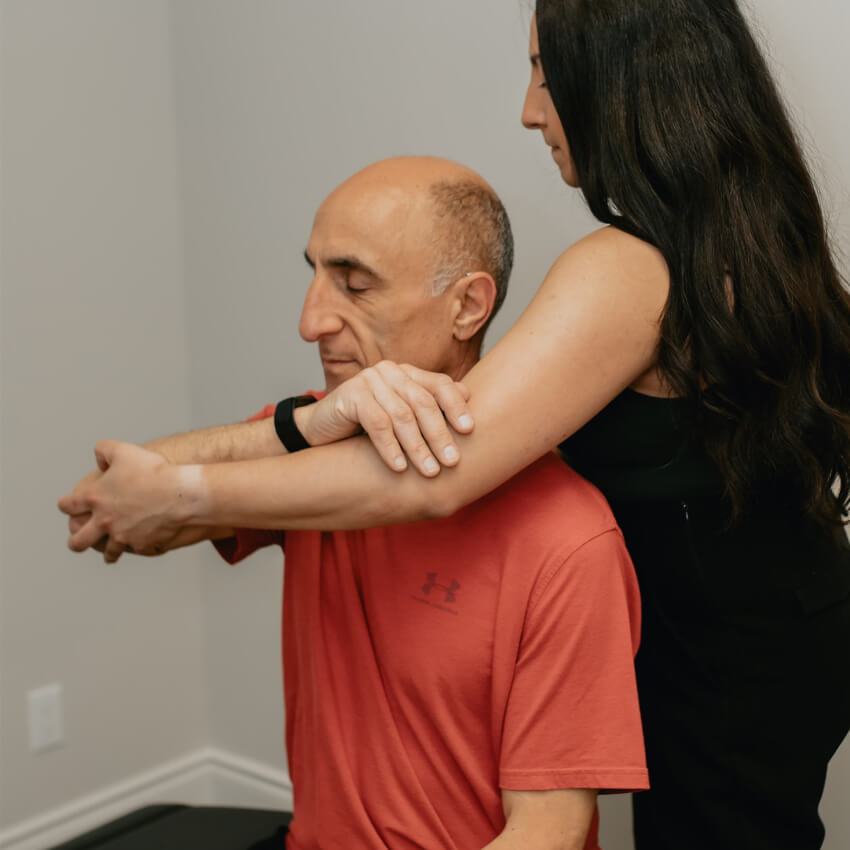 Maybe it’s a twinge when reaching overhead or something you notice at the gym and shrug off. Left alone, shoulder pain can begin interfering with sleep, getting dressed, work, and the activities you enjoy.
Reset Chiropractic & Rehab takes an assessment-first approach to shoulder pain. Dr. Arjun Bali and Dr. Jess Pileggi look beyond the location of your symptoms to understand what may be contributing to the problem and whether conservative care is a suitable option.
More Than One Condition Can Cause Shoulder Pain
Shoulder pain is a symptom rather than a single condition. Several different problems can produce similar symptoms, and understanding which one may be contributing helps guide the most appropriate treatment plan.
Common conditions include rotator cuff-related shoulder pain, shoulder impingement, labral irritation, and frozen shoulder (adhesive capsulitis). Rotator cuff-related pain often involves tendon irritation or weakness from overload. Shoulder impingement occurs when structures within the joint become compressed during certain movements. Labral irritation may cause deep joint pain, clicking, or a feeling of instability, while frozen shoulder develops gradually as the joint becomes increasingly stiff.
Although these conditions can feel similar, they don’t all respond to the same approach. A thorough assessment helps determine what may be contributing to your symptoms.
Why Shoulder Pain Can Persist
Shoulder pain can develop for many reasons, often involving a combination of how the joint moves, how it’s been loaded over time, and the demands placed on it during work, sport, or everyday life. These include:
- Repetitive overhead movement from work, sport, or training
- Reduced rotator cuff strength and shoulder stability
- Inefficient movement or lifting patterns
- Previous shoulder injuries
- Prolonged inactivity leading to stiffness
- Age-related changes affecting tendons and joint capacity
Many people first notice pain when reaching overhead, lifting, rolling onto the affected shoulder at night, or during exercise. Some also experience weakness, clicking, catching, a feeling that the shoulder may slip, or reduced range of motion.
If symptoms continue to interfere with sleep, work, exercise, or everyday activities, an assessment can help determine what may be contributing to them and discuss appropriate treatment options.
Assessment and Conservative Care
Progressive rehabilitation forms the foundation of care. Individualized exercises are designed to rebuild rotator cuff strength, improve shoulder stability, restore function, and gradually increase tolerance for movement.
Recovery varies depending on the underlying condition, its severity, how long symptoms have been present, and individual factors. Some people notice improvement within a few weeks, while others require a longer period of rehabilitation. Addressing the factors that could be causing your shoulder pain may also help reduce the likelihood of recurring symptoms.
Frequently Asked Questions
How long does shoulder pain take to heal?
Can I still work out with shoulder pain?
Get Back to Doing What You Enjoy
Whether shoulder pain is making it difficult to sleep, exercise, work, or simply reach overhead, an assessment can help determine what may be contributing to your symptoms and discuss appropriate treatment options. Contact Reset Chiropractic & Rehab to book an appointment.
